Category: Uncategorized (Page 3 of 4)

Seperempat Abat Perikanan Laut DIY

Restrukturisasi kelembagaan yang ditetapkan dengan Perda No. 7 tahun 1980 dari Seksi Perikanan Darat Dinas Pertanian Rakyat menjadi Dinas Perikanan Provinsi Daerah Istimewa Yogyakarta (DIY) menjadi titik awal ghirah membangun perikanan dan kelautan di DIY. Sejarah yang mengawali pembangunan ini memiliki kemiripan dengan kelahiran Departemen Kelautan dan Perikanan (DKP) melalui Keppres 136/1999, yaitu organisasi yang berdiri dari institusi di bawah Departemen Pertanian menjadi institusi yang independen dan setara dengan induknya. Tidaklah salah jika tahun ini seperempat abad sudah pengembangan perikanan dan kelautan di provinsi ini.


Perubahan yang sedang melanda sebagian wilayah pesisir selatan Jawa (pansel) terutama dalam dekade terakhir menarik untuk diperbincangkan baik dalam konteks sejarah, budaya, maupun ekonomi, apalagi jika perubahan ini dipersandingkan dengan sejarah masyarakat di pesisir lain di utara Jawa (pantura). Jika di utara kita menemukan peran penting wilayah pesisir, tidaklah mudah kita jumpai hal yang serupa di pansel, kecuali di beberapa wilayah seperti Cilacap yang sudah dikenal sejak abad ke-19. Wilayah utara telah dikenal sebagai sentral kekuasaan politik kerajaan ternama dan secara ekonomi sebagai sentral perdagangan dan industri perkapalan. Abad ke-15 sampai ke-17 telah menjadi periode emas ekonomi pesisir, tidak hanya di Jawa tetapi di seluruh nusantara. Pasang surut wilayah ini seperti dikemukan Houben (1994) dalam tulisannya “Trade and State Formation in
Central Java 17th-19th Century” tidak terlepas dari tarik-menarik politik antara pesisir-perdagangan dan pedalaman-pertanian. Dalam kontek sejarah inilah, provinsi DIY pernah dikenal sebagi pusat kekuasaan kerajaan yang berbasis di pedalaman yang sangat terkenal yaitu Kerajaan Mataram.


Dari Petani Menjadi Nelayan

Berbicara tentang kekinian, daya tarik ekonomi sumberdaya kelautan serta berbagai kelangkaan sumberdaya di darat telah memicu komunitas pesisir DIY dan sebagian pesisir lainnya di pansel untuk terjun ke laut. Perubahan yang terjadi dalam dekade ini, dalam perspektif sosio-historis dapat dikatakan revolusioner, tidak hanya karena masyarakat ini lebih dominan berkarakter agraris-pedalaman, tetapi juga karena mereka harus melawan tabir kultural dimana laut dipandang sebagai sesuatu yang sakral dan mistis. Dalam komunitas ini laut dipandang berada di bawah kekuasaan seorang ratu yang oleh Whitten dkk (1999) dalam bukunya “Ecology of Java” digambarkan sebagai isteri gaib dan pelindung penguasa-penguasa mataram dan pewarisnya, sehingga Ia, mengutip Lombard (2000) dalam bukunya “Nusa Jawa” dikatakan perlu selalu disenangkan hatinya. Ritual labuhan dan kiriman sesajen dalam berbagai tradisi di selatan Jawa terutama dalam mengawali peluncuran perdana kapal ikan merupakan salah satu bentuk penghormatan terhadap kepercayaan ini. Di beberapa wilayah, Selasa Kliwon dan Jumat Kliwon adalah hari pantangan untuk melaut yang juga merupakan salah satu bentuk penghormatan tersebut. Tentu, patut dicatat bahwa nelayan-nelayan ini harus melawan kondisi hidrooseanografi Samudra Hindia dengan gelombang besar, jalur perairan dangkal yang sempit dan langsung jatuh ke kedalaman Samudra Hindia, serta berbagai keterbatasan lokasi yang memadai untuk pendaratan kapal ikan mereka.


Pemerintah daerah tentu sangat dominan dalam mengakselerasi perkembangan kegiatan perikanan dan kelautan di DIY. Usaha ini pertama kali diintroduksi pada awal 1980 melalui serangkaian kerjasama antara pemda dengan nelayan dari Cilacap terutama untuk mengenalkan teknik penangkapan ikan. Di tahun 1984,
lima unit perahu motor tempel (PMT) dijadikan kapal latih dengan melibatkan nelayan-nelayan Cilacap tersebut. Kapal ikan tersebut masing-masing diintroduksi di Pantai Samas-Kabupaten Bantul, Congot-Kulon Progo, dan Baron-Gunungkidul. Sayangnya, usaha ini dalam dekade 1980an hanya berlanjut di wilayah yang terakhir, sehingga tidaklah salah jika Baron diidentikkan sebagai perintis perikanan DIY. Setelah pelabuhan perikanan Sadeng-Gunungkidul, selesai di bangun tahun 1992, usaha perikanan mulai berkembang di beberapa wilayah lainnya khususnya di kabupaten yang sama. Namun demikian, dalam perkembangnya pelabuhan ini dibelit permasalahan aksesibilitas, fasilitas pendukung, ketidak-sepadanan teknologi, dan keterbatasan budaya masyarakat sehingga menjadikan Sadeng sarat akan pasang-surut yang ditunjukkan oleh produksi ikan dari 130 ton pada tahun 1995 menjadi 50 ton di tahun 1997, walaupun meningkat dalam tahun-tahun terakhir.


Perkembangan Pesat dalam Era Otonomi

Depresiasi rupiah di pertengahan 1997 dan diikuti dengan naiknya harga ikan, seperti lobster naik dari 50.000-150.000 rupiah per kilogram menjadi sekitar 250.000 rupiah per kilogram (Suadi 2002), yang kemudian diikuti oleh gelombang otonomi daerah di tahun 1999 mendorong peningkatan pesat investasi perikanan. Jika pada tahun 1997 jumlah total perahu hanya 139 unit, pada tahun 1999 meningkat menjadi 310 unit, dan saat ini telah menjadi 524 unit. Lokasi pendaratan ikan juga terus bertambah karena adanya investasi baru baik oleh masyarakat maupun oleh pemerintah daerah dan diperkirakan tidak kurang dari 19 TPI saat ini, atau secara rata-rata 5.6 km per 1 pendaratan ikan.


Kontribusi positif pembangunan perikanan terhadap ekonomi di pesisirpun sangat nampak seperti pendapatan nelayan yang melebihi UMP DIY, perumahan maupun pendidikan anak yang membaik, termasuk partisipasi wanita yang sangat menonjol. Usaha ini juga menjadi triger lahirnya berbagai aktivitas ekonomi di pesisir, terutama pariwisata yang dimotori para istri nelayan. Pemerintah daerah terus mengembangkan usaha ini dan sejak otonomi daerah bergulir di tahun 1999, pemerintah telah mencanangkan lahirnya pelabuhan berbasis perikanan samudra, bukan hanya perikanan pantai. Ketika isu pelabuhan ini bergulir ketiga kabupaten pesisir yang telah disebutkan sebelumnya berlomba untuk menjadi lokasi pembangunan sarana perikanan tersebut, walaupun akhirnya Pelabuhan Glagah, Kulon Progo nampak mendapat prioritas dengan peletakan batu pertama di tahun 2005. Namun demikian, pembangunan pelabuhan ini masih akan alot karena permasalahan AMDAL (Kedaulatan Rakyat, 14-12-2005).


”Precautionary Approach” Pengembangan Perikanan

Patut kiranya dikedepankan prinsip dan pendekatan kehati-hatian (”precautinary approach”) dalam pengembangan perikanan di wilayah ini, karena satu kenyataan yang dihadapi perikanan dunia saat ini adalah laju penurunan produktivitas perikanan dan berbagai ancaman kerusakan sumberdaya. Garcia dan Moreno (1999) dalam papernya tentang status perikanan dunia, melaporkan lebih dari 60% perikanan saat ini telah dieksploitasi secara berlebihan dan tidak lebih dari 5% yang berhasil pulih kembali melalui berbagai program rehabilitasi. Beberapa wilayah pantai di Indonesia juga diidentifikasi telah tereksploitasi secara berlebihan seperti di Selat Malaka dan Pantai Utara Jawa, bahkan di wilayah yang terakhir diperkirakan habitat ikan telah mengalami kerusakan berat. Indikasi pemanfaatan yang semakin intensif disebabkan investasi perikanan yang meningkat pesat juga mulai nampak di selatan DIY seperti ditunjukkan oleh produktivitas perikanan dari 50 kg per trip sebelum tahun 1997 menjadi kurang lebih 20 kg per trip dalam tahun-tahun terakhir (Suadi dkk. 2003). Indikasi semacam ini mengingatkan akan pentingnya pengelolaan perikanan secara bijaksana apalagi sebagai sumberdaya yang kepemilikannya masih dikenal sebagai sumberdaya kepemilikan bersama dan bersifat terbuka, kekurang hati-hatian akan mendorong perikanan pada apa yang dikhawatirkan oleh Hardin (1968) sebagai “the tragedy of the commons”.


Beberapa metode pengelolaan konvensional seperti pembatasan jumlah investasi baru, pengaturan alat tangkap dan musim penangkapan, serta quota penangkapan ikan telah dan sedang digunakan di beberapa negara seperti
Australia, Jepang, dan Amerika. Bahkan kini, seperti dipaparkan oleh Clark dkk. (2005) dalam Jurnal Environmental Economics and Management, sedang dipromosikan program “buy back access capacity” yaitu suatu program subsidi untuk membeli kelebihan investasi perikanan untuk menjaga usaha ini agar berkelanjutan. Di Jepang selain berbagai program pengaturan, promosi rehabilitasi perikanan melalui program pengkayaan stok ikan (“stock enhancement”) juga sangat maju. Program seperti ini di Jepang bisa berjalan karena pemerintah, masyarakat dan industri sangat mendukung terutama dengan berbagai keberhasilan dari lembaga penelitian memproduksi secara masal benih ikan untuk kebutuhan pengkayaan stok.


Beberapa potongan catatan berikut dapat menjadi pertimbangan pengembangan perikanan laut DIY. Pertama, untuk menghidari kemunduran produktivitas perikanan, pembatasan “new comers” sudah sepatutnya dipikirkan. Upaya ini tentu perlu dipadukan dengan diversifikasi pemanfaatan sumberdaya saat ini yaitu dari dominasi perikanan demersal (dasar) ke jenis lainnya terutama ikan pelagis (permukaan). Kedua, pemerintah daerah telah menetapkan pengembangan perikanan dari berbasis pantai ke samudra melalui penyediaan sarana pelabuhan perikanan, pembangunan ini tentu sangat berguna untuk mengurangi tekanan berlebihan eksploitasi sumberdaya di pantai dan memperluas perikanan saat ini termasuk untuk menyediakan lapangan kerja baru. Namun demikian, pengalaman pembangunan fasilitas sejenis di Sadeng patut menjadi pelajaran berharga, dimana penyediaan fasilitas perikanan beserta teknologi terkait lainnya tidak hanya terkait dengan masalah teknis, tetapi juga menyangkut persiapan dan rekayasa sosial. Sebelum fasilitas tersebut berdiri tegak, pengetahuan yang memadai akan status sumberdaya ikan di selatan Jawa atau samudera Hindia secara umum juga perlu mendapat porsi kajian yang memadai. Ketiga, sebagai produk yang bersifat cepat rusak, pengembangan teknologi pasca panen khususnya untuk mememelihara mutu produk perikanan dibutuhkan salah satunya untuk menjamin keamanan pangan. Kehandalan kualitas produk ikani dapat menjadi salah satu isu terdepan komoditi pariwisata di desa pesisir DIY. Keempat, untuk pengembangan program rehabilitasi sumberdaya ikan, DIY berpeluang sebagai perintis di
Indonesia karena fasilitas UPTD Perikanan Laut tersedia dan kegiatan penelitan sumberdaya ikan lokal sudah dimulai di unit ini misalnya UGM dengan penelitian lobster dan upaya pembenihannya. Tentu saja, seiring dengan berkembangan usaha berbasis kelompok baik budidaya ikan/udang, pertanian lahan pasir, peternakan, dan pariwata termasuk usaha berbasis wanita menjadi modal sosial untuk mengintegrasikan perikanan kedalam pembangunan desa secara menyeluruh.


Penutup

Belajar dari perkembangan pesisir di nusantara, patut kiranya dicatat bahwa pasang surut pesisir tidak terlepas dari faktor ekologi, ekonomi, sosial, dan kelembagaan. Faktor itu juga yang dicatat oleh Masyhuri (1996) dalam bukunya Menyisir Pantai Utara Jawa, yang juga menentukan pasang-surut perikanan di Utara Jawa. Pesisir pernah mencapai periode emas dimasa lampau karena sekurang-kurangnya karena ketersediaan sumberdaya alam yang memadai, keterkaitan hubungan antara daerah pedalaman dengan pesisir terutama dalam perdagangan hasil-hasil pertanian, kemampuan dalam teknologi perkapalan sehingga memudahkan hubungan antar wilayah, serta adanya dukungan secara kelembagaan yang sangat memadai. Tentu harapan bersama, pembanguan pesisir di DIY atau Indonesia secara umum akan menuju arah yang berkelanjutan. Bagi DIY, upaya ini terbuka apalagi penguasa laut selatan yang ditakutipun telah berubah menjadi bersahabat, dengan menyediaan wilayah kekuasaannya untuk kesejahteraan rakyat. Tinggal menunggu kemauan semua pihak mewujudkannya.

Suadi
e-mail: suadi(at)ugm
(dot)ac(dot)id

Let`s share knowledges, sciences, and experiences
Technology, Partnership & Equality
Mengkaji Ulang Pola Pengelolaan Perikanan

Konflik perikanan akhir-akhir ini kembali menjadi berita setelah di era 1970an konflik sangat mudah dan sering muncul kepermukaan sebagai akibat dualisme industri perikanan laut. Selama bulan Januari yang lalu konflik dengan kekerasan terjadi sekurang-kurangnya lima kali antara nelayan Jawa Tengah dan Kalimantan (Kompas 25/1). Konflik nelayan pada 20 November 2005 di Pulau Tambolongan, Selayar, Sulawesi Selatan juga meninggalkan luka dengan tewasnya seorang nelayan dan ditahannya 38 nelayan lainnya (RRI 6/2). Selama bulan September 2004 juga terjadi beberapa kali antara nelayan Madura dan Sidoharjo yang juga berakibat kehilangan nyawa. Pada tahun yang sama juga Kompas (16/1) melaporkan konflik dengan ancaman bom terhadap nelayan Jawa Tengah di selat Makasar. Perebutan sumberdaya ikan yang semakin langka menjadi salah satu akar konflik perikanan saat ini, sehingga menuntut kita untuk bepikir ulang tentang cara mengelola sumberdaya ini.

Kelangkaan sumberdaya memang telah menjadi isu global, ketika sumberdaya ikan dunia hanya tinggal 4% yang belum dieksploitasi, 21% dieskploitasi pada tingkat sedang, 65% dieskploitasi pada tingkat penuh dan berlebihan, 9% rusak, dan tidak lebih dari 1% yang pulih (Garcia & Moreno, 2001). Intensifnya pemanfaatan sumberdaya ikan tidak hanya meninggalkan permasalahan akut kelangkaan sumberdaya, tetapi juga krisis ekologi, ekonomi, dan sosial terutama di daerah-daerah pantai. Kini, ciri dasar perikanan sedang mengikuti perikanan hipotetik Ricker (1975) dimana pada fase awal populasi ikan tumbuh sampai ukuran maksimum dan perubahannya hanya diatur oleh pertumbuhan dan kematian alami. Ketika tekanan ekploitasi semakin intensif dengan sedikit intervensi untuk konservasi dan rehabilitasi, sumberdaya ikan terus menurun dan hanya sedikit yang dapat pulih kembali. Gambaran terakhir inilah yang menjadi ciri perikanan di Asia Tenggara seperti dikemukan Butcher (2004) dalam bukunnya “The closing of the frontier: a history of the marine fisheries in South East Asia c. 1850-2000”.

Perikanan Indonesia juga sedang mengalami nasib yang serupa. Secara nasional, hasil pengkajian stok ikan oleh Pusat Riset Perikanan Tangkap dan Pusat Penelitian Oseanologi tahun 2001 menunjukkan 65% sumberdaya dieksploitasi secara penuh atau berlebihan dan sumberdaya ikan di kawasan barat mendapat tekanan yang paling berat. Dari aspek produksi, pertumbuhan yang tinggi terjadi pada dekade 1970an akibat pesatnya laju motorisasi perikanan yang mencapai lebih dari 10% per tahun. Sayangnya, motorisasi ini menghasilkan dualisme industri perikanan. Keberpihakan berlebihan pada perikanan skala besar (trawl dan purse-seine) melahirkan berbagai konflik dan menjadi catatan buruk pengelolaan perikanan Indonesia. Saat ini, perikanan cenderung tumbuh semakin terbatas dan berdasarkan data FAOSTAT (2005) pertumbuhan produksi tidak lebih dari 2% per tahun selama periode 1999-2001. Dalam periode yang sama, berdasarkan data DKP (2003) nelayan tumbuh di atas 2% per tahun dan melebihi laju pertumbuhan kapal ikan. Indikasi ini tidak hanya menunjukkan sumberdaya ikan semakin terbatas mendukung ekonomi nelayan, tetapi juga menjadikan perikanan sebagai pelabuhan terakhir masyarakat yang tidak memiliki akses terhadap lapangan kerja lainnya. Tidaklah mengherankan jika Béné dalam Jurnal World Development (2003) menyebut perikanan yang sedang berjalan seirama dengan kemiskinan.

Pemerintah sebenarnya mengembangkan beberapa pola yang secara langsung mengatur pemanfaatan sumberdaya ikan. Surat Keputusan (SK) Menteri Pertanian No. 607/Kpts/Um/9/1976 mengatur jalur-jalur penangkapan ikan untuk mereduksi konflik perikanan. SK ini diperkuat dengan beberapa SK lain dan pada tahun 1999 Menteri Pertanian mengeluarkan SK 392/Kpts/IK.120/4/1999 yang mengatur jalur penangkapan ikan yang baru beserta karakter kapal dan alat tangkapnya. Pemerintah juga mengatur jumlah tangkapan yang diperbolehkan (”total allowable catch”, TAC) melalui SK Menteri Pertanian No. 473/Kpts/IK.250/6/1985 untuk perikanan di zona ekonomi eksklusif Indonesie (ZEEI). Kebijakan ini juga secara tegas tertuang dalam Undang-Undang (UU) Perikanan yang baru No. 34/2004 (pasal 7). Selain perijinan perikanan yang diperkenalkan sejak lahirnya UU Perikanan No. 9/1985, registrasi kapal ikan juga telah menjadi salah satu alat pengelolaan. Sayangnya, efektivitas pengelolaan perikanan yang dikembangkan selama ini tidak memuaskan. Dalam banyak kasus, dominasi negara yang berlebihan justru menghilangkan berbagai kearifan lokal yang menjadi tradisi pemanfaatan sumberdaya secara berkelanjutan. Walaupun UU perikanan No. 34/2004 menyebutkan keharusan memperhatikan hukum adat dan pentingnya memperhatikan peran-serta masyarakat (pasal 6 ayat 2), namun tidak ditemukan penjelasan lain lebih jauh dan nampak peran pemerintah dalam pengelolaan perikanan masih mendominasi.

Pengelolaan sumberdaya perikanan ke depan perlu mempertimbangkan kembali pengakuan hak atas sumberdaya ikan yang telah memiliki akar sejarah dalam tradisi masyarakat pesisir. Pemerintah Belanda menguatkan model ini misalnya dalam pengaturan perikanan bunga karang dan mutiara tahun 1916 dan ketentuan ”territoriale zee en maritene kringen ordonantie” (TZMKO) tahun 1939 untuk melindungi nelayan dan mengkonservasi sumberdaya ikan. UU Pokok Agraria No. 5/1960 juga menjelaskan adanya hak pemeliharaan dan penangkapan ikan (pasal 47), walaupun peraturan pemerintah yang mengatur ketentuan ini tidak ada. Sepenting apakah hak ini bagi perikanan? Belajar dari perikanan Jepang, adanya hak perikanan tidak hanya melindungi aktivitas kenelayanan, tetapi juga upaya ini mampu memberikan kontribusi yang besar dalam pembiayaan pengelolaan perikanan khususnya yang menyangkut ”transaction cost” dalam pengumpulan informasi, pemantauan sumberdaya, dan program pengkayaan stok ikan.

Seiring dengan semakin langkanya sumberdaya ikan, insentif untuk konservasi sudah saatnya diintroduksi. Produksi masal benih ikan menjadi kunci pengembangan program pengkayaan stok dan harapan untuk ini sangat terbuka dengan keberhasilan produksi benih jenis-jenis ikan yang terancam misalnya kerapu. Keberhasilan perbenihan juga mejadi kunci pengembangan budidaya, walaupun saat ini budidaya sedang berbalik ke spesies introduksi misalnya udang vannamei. Sementara, rehabilitasi habitat ikan akhir-akhir ini mendapat perhatian dengan adanya program Coremap yang didanai donor internasional.

Tentu, integrasi perikanan kedalam pembangunan desa perlu didorong untuk menghindarkan pembangunan yang bersifat sektoral. Berkembangnya usaha-usaha berbasis kelompok seperti pengolahan dan perdagangan ikan, budidaya ikan/udang, pertanian lahan pasir, peternakan, dan pariwisata termasuk usaha berbasis wanita di beberapa wilayah pesisir menjadi modal sosial untuk mengintegrasikan perikanan ke dalam pembangunan desa. Berbagai upaya ini tentu sangat tergantung ”sense of urgency” dan ”political will” pemerintah yang saat ini banyak memegang kendali pengelolaan perikanan. Bukanlah hal yang mudah ketika pemerintah tengah memasang berbagai target pembangunan di atas tahun-tahun sebelumnya, seperti produksi perikanan 7,7 juta ton, penerimaan devisa US$ 3,2 miliar, konsumsi ikan 28 kg/kapita/tahun, penyerapan tenaga kerja 7,7 juta orang, dan kontribusi terhadap PDB 3,1%. Prioritas pada pengelolaan tidak hanya bermakna menjaga keberlanjutan perikanan laut yang menyumbang 75% total produksi perikanan nasional, tetapi juga menyelamatkan lebih dari 2,5 juta nelayan yang segara langsung tergantung padanya.


Oleh:
Suadi
Jur. Perikanan dan Kelautan UGM

e-mail: suadi(at)ugm(dot)ac(dot)id

Let`s share knowledges, sciences, and experiences
Technology, Partnership & Equality

Lesson from the Environmental History of the World

A few interesting points of Ideas and Impact of J. Donald Hughes (An Environmental History of the World: Humankind’s Changing Role in The Community of Life).

  1. Human system of ideas about the natural world might be classified into three general categories:

a. Traditional à evolving system that included earlier ideas with new ones that might be found in the Hinduism, India and Shinto’s thought in Japan. The symbols and practices of ancestral on hunting-gathering, agrarian, and pastoral societies and the attitude toward nature typical of them. They have already transmuted but the process of change in these systems was typical evolutionary than revolutionary. They tend to retain the worship of natural entities including nature gods and their teaching practice might embody the issue of conservation of nature.

b. System created by reformers à the reformers who taught the oneness of life including the humans and nature. Those people are Mahavira (Jainism), Sidharta Gautama (Buddhism), Lao Tsu (Taoism), and philosophers. They view the universe as an organism of which humans and other creatures are parts. The behavior of creatures is closed related to the motion of the nature. In Buddhist ethics we can find the teaching of “do not harm” neither to humans, to animals or plants, or to things usually considered inanimate, so does in Jainism (well known as ahimsa). Taoism also counseled their followers making few demands on environment. Appreciate the nature is a few key words of those reformer teaching.

c. Monotheistic religion à this faith made humans God’s steward with dominion over and responsibility for the creation. This group arose under the monotheistic faith including in Zoroastrianism and “Abrahamic” religions (Judaism, Christianity, and Islam) in which they believe only to one supreme God. Humans are his representatives, and their donation over and stewardship of the earth and its non-human inhabitant must be exercised within ultimate responsibility to the creators. In Islamic thought, for example, human depicted as a steward on the earth, they have power to regulate the nature, and they must be in obedience of God’s law including to protect it and to not make destroy it. Nevertheles, those religions, have been blamed for motivating ecological damage because they seem to separate God from nature, leaving nature without spiritual worth, and because by placing humans above the rest of creation, they apparently give them permission to use other creatures and the earth itself without considering they have any value of their own. It is, however, to other historical factors that we must look for the explanation of the fact that the homelands of that monotheistic faith became environmentally devastated even in early times.

2. Two important roles of human in the changing process of natural world in the late of ancient history might be classified into types:

a. The human attitudes to nature including their ability to organized number of people in vas project that transformed the landscape.

b. The human action impact to natureà including pollution, deforestation etc.

3. How do those human roles in historical perspectives of their relationship to nature, there are three examples lesson from Athens, Xian, and Rome in the ancient times.

a. Athens: mind and practice

The philosophers dominated the system ideas of the ancient Greek. The philosophers had great ideas about development particularly in building cities and their associated work. The people, however, who actually built and operated them did not always trust and followed the philosophers.

Water is a limiting factor in Athens thus in 530 BC a famous tunnel on the island of Samos was constructed to carry an aqueduct to the city. It was taking from springs in the hills (length 1000 m). Euphalinus designed it perfectly based on the order of the tyrant Polycrates, but the contractor of that building did not rely on the theoreticians and resorted it to trial and error. Plato and Aristotle were other philosophers known introducing issues on conservation of water including on the new construction of tunnels, irrigation and fountains project. Related to extraction of water from the arid countryside, its impact to the biota also existed. Thus, water purification had come to issue in this city.

Even in the Greek city-state, the city and countryside consider as a unit, but city seemed became the main concerned. This city grew organically and planlessly, thus the environmental deterioration in ancient Athens foreshadows the modern ones. Athens suffered from crowding, noise, air and water pollution, accumulation of waste, plagues, and additional dangers to life and limb.

Philosophers suggested the ruler to consider the population number regulation (limiting the numbers). They also introduce a concept of “autarchic” city, the city that could raise its own natural resources needed from its own territory. Even though, this idea was not achieved in the classical Athens due to its local ecosystem limitation, thus the Athenians enhancing trade and conquest through a development of military powerful city. Forest product was one of important trading commodity as well as the main source of shipping industry and the shipping fuels. Related to the forest issue, Plato and Aristotle emphasis the important of conservation and both introduce some practical suggestion to avoid further deterioration of this resource. By the mid-fifth century BC, the surface of Attica, Athens’s land, was largely deforested. Deforestation affected to the declining of the agriculture and a chronic shortage of wood and other forest product. Such condition drove the Athenians to expand the timber searching from abroad and group of Athenians colonist’s were dispatched to some others region abroad.

Many problems found in the modern city are not new, ancient cities knew them to greater or lesser extent. The economic factor was one of the most importance factor effected the environmental problems and in the ancient drove a philosopher such Aristotle to gave his more attention to the role of environment and resources economic. In his opinion, economy and ecology share the same Greek root, and their concern cannot be separated without danger. Even though, the philosopher’s ideas in ancient Athens were not actual practice and they are only a tiny minority. The failure of Athens to adapt its economy to natural system in harmonious ways is a cause of its decline, and is one reason why the power it exercised in the Golden Age did not persist very long into Hellenistic period that followed.

b. Xian: Chinese environmental problems

Xian, an ancient capital, is redolent of the Chinese past. Qin Shi Huangdi inspired awe among people and he well-known for his great idea to build the Great Wall. To grow an efficient bureaucratic autocracy Qin emperor commanded the scholars to desist from discussion the past and buried alive who protest. He also commanded to burn all books related to various discussion of philosophy, except those dealing with important issues such medicine, pharmacy, agriculture, and arboriculture, as well as divination by tortoise shell and yarrow.

There are hundreds of schools of philosophy in the decades before Qin conquest China. Those schools thought a good relation between human and the nature and people to live in a “good and simple life” (doing as little interfere with the natural order as possible) as depicted in the basic text of Taoism written by Tao Te Ching (lived in 6 century BC). In fact, the animosity of Qin Shi Huangdi to the Confucians was not based on their attitude to nature, but to their critique on ruler who failed to follow what those schools consider as the right custom.

Mencius (lived in 4 century BC) depicted the rapid economy and environmental change of China particularly when business involved in markets and trade were actively done. What Mencius depicted for the China case was similar to Plato concerning the Athens. To avoid further environmental degradation, Mencius suggested a land management as one of the most important responsibilities of the state. He advise ruler to make periodic inspection tours of their domains, and to observe the condition of the land. Concerning to the deforestation and removal of wildlife issues, in Mencius’ time, the expansion of agriculture into undeveloped land was the major force. Furthermore, the ruler also established gardens, parks, and preserves that were not a wilderness.

Philosopher such as Mencius has criticized the extravaganza life of many nobles which wasteful resources. Even Mencius advices a middle way, some modern Chinese commentator have criticized Mencius as the “anti-development”. In most case, the ruler of China was also not taking seriously into account to the Mencius advices. The legalist philosophy was more favored to the Qin Emperor when it allowed private ownership to self-interested farmers and restricted the businesspersons. To Qin emperor, the problem of short food supply could be avoid by using two methods: i) bringing more land under cultivation and by constructing irrigation systems; and ii) store grain in years in wide areas under his military power that covered whole China.

Even the fall of the Qin dynasty was not mainly caused by the decline of the environmental of China (particularly deforestation), and it was by his ostentation particularly when he constructed a huge palace for him self in Xian (in 212 BC), this issue became a strongest one for his opposition to fight the emperor. Finally, this dynasty only has a short-lived, and so did his successor. In the Han dynasty that followed, the teaching of Confucius and Mencius returned to favor. The new leader introduced some new policies and kept some Qin policies continued especially those dealing to agriculture. However, the time to come would see an uneven but inexorable rise in population; it was also a lamentable lost of forest occurred, and danger from famine still continued in spite of expansion of agricultural land.

c. Rome: environmental reasons for the decline and fall

Number of interacted process brought down the Rome decline. One of these was the Roman mistreatment over their natural environment including the over exploitation of scarce natural resource such as forest and soil. Roman also failure to find sustainable ways to interact with the ecosystems of Italy and the many others land including Dacia, which they conquered. Deforestation and its consequences, erosion, lead the list of disasters. Agricultural crises were responsible for rising prices, food shortages, and labor shortages. Even Industry did not make up as large segment of the economy as today, but it had significant environmental consequences such as pollution, deforestation, ice caps, etc.

Roman attitude to the natural world failed to maintain a sustainable balance the Mediterranean ecosystem within which they lived. The root was the short-term profit and shortsighted. The trend of the Romans’ action affecting the environment over the centuries was destructive. They exploited renewable resources faster than their ability to recover, and consumed the renewable resources as rapidly as they could. Thus, environmental change as a result of human activities supposed could be judged as one of the causes of the decline and fall of the Roman Empire.

4. Conclusion

a. Systems of ideas have power to shape human action. When they commanded the allegiance of human societies, system ideas have built institution and monuments, stimulated conquest as well as resistance to conquest, and changed the face of the earth.

b. The use of the system ideas by states is far more common than the attempt of states to follow those systems whenever they conflict with what the state consider being their own interest. Therefore, the fact that environmentally positive teaching can be found in ancient religion and philosophies do not always surely indicate that they were put into practice.

c. The religions and philosophies that wish to help our species adapt, survive, and at same time preserve, the community of life must be able to change, discarding outmoded formulation and recognizing the need to respond to ever-new environmental challenges.

Let`s share knowledges, sciences, and experiences
Technology, Partnership & Equality
Indonesia after Economic Crisis: A Poverty Issues

This is some interesting points from a book entitle “Indonesian Living Standards Three Years After the Crisis: Evidence from the Indonesian Family Live Survey” written by Center for Population & Policy Studies Gadjah Mada University Yogyakarta, RAND, and Partnership for Economic Growth USAID.
  1. Real per capita GDP rose four-fold between 1965-1995. with annual growth rate averaging 4.5% per year.
  2. The poverty head count rate declined from over 40% in 1976 to just under 18% by 1996.
  3. When economic crisis hit in the medio 1997, the GDP growth decreased to between 12-19% until 1999.
  4. The economic crisis affected the poverty increasing to 27% between 1997 and late 1998. The increasing of rice price became an important factor because it share 20% of the poor budged share. While, the income of the non-poor was predicted decreasing to 20%.
  5. The data in this study was obtained through IFLS (Indonesian Family Life Survey) conducting in 1997 and 2000. The total samples were 33,441 people in 1997 (15,770 people in urban areas) and 42,733 people in 2000 (20,732 people in urban area).
  6. The FPI (food price index) since the economic crisis has increased 3 times, thus when the share of food is higher to the total expenditure for a certain areas there would be the economic crisis impact badly to the people in the area.
  7. The share of food in the rural area is higher compare to the urban areas and it was predicted 56.3% in 1997 and 56.8% in 2000. The food expenditure for the poor is the highest (58,1% in 1997 and 57.6% in 2000). Thus we may say, the poor and the rural community particularly the non-food producer might have been theaten badly by the economic crisis. I should note that the rice was one of the most important food expenditure variable that used in this study inwhich at national level its share reached 13.8% in 1997 and 11.4% in 2000.
  8. The other interesting finding of this study was the poverty number since and after the economic crisis. At national level, the poverty numbers reached 17.4% in 1997 became 15.5% in 2002. The poverty number in the urban area was 13.3% in 1997 became 11.6% in 2000, while in the rural area the number was higher to reached 20.1% in 1997 and 18.7% in 2000. The reseach also depicted ditail figures of individuals living in poverty propotion based on their ages in which the children was badly impacted by the crisis.
  9. Based on those data, I would like to mentioned two points: first, there was a decreasing trend of the poverty at the national level or based on the area chategory and ages three years after crisis. The second, the movement FPI, as mentioned previously in point number 7, contribute positively to the movement of the poverty numbers. Thus, food will still become one of crucial issues in the current Indonesian development discourse.
  10. Well, how about the current policy on new fuel price released 1 October last year? Recently, government also plan to make new policy on electric tarrif (TDL), how about this one? Is it also such energy crisis (particularly the oil) will give the same impact to the poverty as the economic crisis? The impact of such policy to the inflation might become the main key factor particularly to the particularly to the food price in which has determined as the key indicator to assess the poverty number. Let me to cite one simulation data published by Teguh Dartanto (click Inovasi Online) in which the policy on new fuel price on October 2005 increase the poverty number 1% or 2 million people (the intial number 16.25% based on BPS data). Thus, the oil crisis will also become the other important issues of the current Indonesian economic development.
  11. How about the poverty of the community in the pesisir? Well, the poverty in the pesisir is not only corelated to those mentioned-issues but also link to the scarcity of the natural resources, let we say fishery resources. But, let me discusse about this matter next time with the spesific issues.
Let`s share knowledges, sciences, and experiences
Technology, Partnership & Equality
Quantitative Aspect of Agricultural Development in Japan

Summary of Chapter I of the Agricultural Development of Japan: a Century’s Perspectives, by Hayami, Y. and S. Yamada, 1991, University of Tokyo Press.
Agriculture in this discussion only covers the farm sector and does not include forestry and fishery. The analysis based on the historical statistic data, recorded since early of Meiji Era (1868) up to 1985, to determine the changes or the trend in agriculture growth in term of agriculture product, input, and productivity in the modern Japan.
The Japanese agriculture chronologies might be ascertained as follows: 1) Period I, approximately 1880-1990, we may called steady growth; 2) period II, 1900-20, accelerated growth; 3) period III, 1920-35, relative stagnation; 4) period IV, 1935-45, devastation by World War II; 5) period V, 1945-1955, postwar recovery; 6) period VI, 1955-70, rapid growth; and 7) period VII, since 1970, stagnation. For a broader phase, the period I and II we may call “initial growth phase”; period III as “interwar stagnation phase”; period V and VI as “postwar growth phase”; and the last period as “recent stagnation phase”. Those chronology and phase will be explored in this brief summary of this chapter.
Agriculture in Economic Development
The shift pattern of economic development from rural based to industrial based primarily occurred in the Meiji era. In the early of Meiji era, agriculture share predicted around 69% of total workers around 21.86 million people, to only 8.7% in 1985. While agriculture shares to total NDP decreased to only 3.9% in 1985, from 38.4% in the early of Meiji era. The rapid decreasing rate was occurred in the period after World War II (in average more than 20% per year), particularly in the period between 1950’s-1960`s in which industrialization and economic growth develop rapidly. As a result, Japan economic has shifted from predominantly rural country to the one of the most highly industrialized nation in the world.
Trend in Agriculture Output

The trend analysis includes the growth in aggregate output and production by commodity groups. Figure 1-1 (page 18) and Table 1-2 (page 19) indicated the trend in total production, total output, gross and net value added. Based on the data, the growth trend as previously mentioned might be divided into seven periods, but to simplify the agriculture output growth were categorized in four major phase. They are: (a) relative rapid growth until the 1910`s, (b) relative stagnation in the interwar period, (c) a spurt following World War II up to the 1960s, and (d) stagnation in the 1970s and 1980s. The first phase was indicated by relative fast growth of total production and output that reached 20% and 25%, respectively. Even the growth of gross and net value added though less clear in this period, this rapid growth parallel to industrial growth. Fortunately, in the second phase the agriculture entered the stagnation phase, even the industrial sector continue to expand, in that the agriculture output declined to more than 50% compared to previous phase. The shortages in labor and other input for agriculture due to the military expansion to China and followed by the pacific war might become some reasons a sharp declined of the agriculture performance. The rapid growth of agriculture, called a spurt, was occurred again after devastating by World War II up to 1960s in which the total production and output far above the prewar period. As the structural adjustment to industrial country, particularly in the year 1970s-1980s, the agriculture output shift again to a distinct stagnant in that total production, output, and value added decreased to more than 70% compared to other period after World War II. Moreover, in the postwar period, the increases used of non-farm input (fertilizers, machinery, etc.) and fixed capital drove the total agriculture product and output growth more rapid compare to its gross and net value added.
Similar to the overall agriculture output, by the commodity, we might be also sequenced the commodity output growth into four phases as previously discussed. However, as a great important commodity, rice, even yearly grew slowly, the major determinant of the growth pattern of total production. In contrary, livestock even become a critical component to determine the total production in the postwar period (grew 9% per year); it was started from negligible level in the prewar period. In addition, the sericulture growth rapidly from the early period of Meiji Era until 1920s, but continued to decrease after this period. The world depression and the competition from artificial fibers might contribute to the decreasing trend of sericulture. Thus, sericulture finally reduced to such low level and might affect the aggregate growth rate.
Labor and Land in Agriculture
Labor and land is very important factor in agriculture development in Japan. The number of labor decreased slightly, at the average rate of 0.1% per year, for the entire prewar period. Even the number increased immediately after World War II, it began to decline sharply with the outset of the rapid economic growth in the mid 1950s. According to their workhours, for period 1880-1920 the number of workhours rose by 36%, while the number of farm workers decreased by 5%. Due to the double cropping paddy field practices and expansion into sericulture as sideline enterprise to the production of staple cereals resulted the increasing in workhours per worker of 42%. Nevertheless, after 1920 the workhours tend to move parallel to number of workers, then followed by sharply declined in the postwar period, particularly in the rapid economic growth period from 1960s to 1970s.
Similar to labor state, the cultivated land or cropland also increased steadily at the average 0.5% until 1920, then stagnant that after. Moreover, the rate of land utilization has been sensitive to changes in the demand and supply of farm labor. As the land become the limiting factor, the productivity of land and labor are two important factors generated the growth of agriculture in Japan. The major element in explaining the increase in output per farm worker was the rise in yield per hectare for the prewar period and the postwar period until 1955 in which 70% of the growth in output per worker is accounted for by the increase in output per hectare. However, the contribution of improvement in cultivated land area per worker to the labor-productivity growth rate has become the major element since 1955, when the absorption of the agricultural labor force by industrial and service sector accelerated. In other words, in the postwar period the improvement in the land/labor ratio played a significant role in the growth of labor productivity when the labor input sharply declined.
Factor Input, Factor Price, and Factor Shares

Agricultural production factors in this discussion classified into four categories i.e. land, labor, fixed capital, and nonfarm current input. Over the whole period, the inputs of the two primary factors, labor and land, and capital changed slowly relative to nonfarm current inputs in the prewar periods. However, in the postwar period capital increased, while labor decreased, both at rapid pace, reflecting the rapid progress in farm mechanization. The rates of growth in current inputs, particularly fertilizer in the prewar period, and feeds in the postwar period, far exceeded those other inputs. Related to the factor price, the rapid rise in the price of the farmland for the prewar period indicated the fact that land was the limiting factor for agricultural production in this period. While the rapid rise in the farm wage rate in the postwar period implies that labor has becoming the increasingly scarce relative to other factors in recent years. The rapid decline in the price of fertilizers relative to the price of land can be identified as a major force that induced the substitution of fertilizer for land, thereby increasing the input pf plant nutrients per unit of farmland area. Likewise, it is clear that the relative decline in the price of machinery capital vis-a-vis the farm wage rate has been a stimulus in the substitution of machinery for the labor. In other words we can said that the technical progress in Japanese agriculture was of the land-saving and fertilizer-using for the prewar period and that it began to bias toward the labor-saving and machine-using direction when labor shortage became serious after around 1960.
Total Input and Total Productivity

The total input in this term is the aggregate of single index of labor, fixed capital, and nonfarm current inputs by factor-share weights, and expressed as chain-linked index. While the total productivity defined as the index of total output divided by the total input and expresses the technical efficiency or the changes of output per unit of input in agricultural production. Over the whole period, the indices of total input in both flow and stock term increased at the annual rate 0.4% while total output grew at 1.6%. Consequently, total productivity rose by 1.2% per year in both terms. This implies that roughly, 1/4 of the growth of total output is explained by the growth in input, or 3/4 output growth is left unexplained by increase in conventionally measured inputs. Even though, there were large variations among periods in the rate of growth in total productivity as well as its relative contribution to the output growth rate (Figure 1-13). The increase in the rate of output growth from period I to period II was associated with the rise in the input growth rate, but through period I and II, productivity growth was the dominant factor in determining the growth rate of the total output. The interwar stagnation in the period II and III might well explain the deceleration in the rate of growth in productivity in this period. In period IV, the performance declined significantly due to the devastation of World War II, even followed by the high rates of output growth in the period V and VI. However, the output growth in period V for recovery from the war was largely explained by the increase in inputs, the output growth in period VI is largely explained by a rise in productivity. From period VI to VII the growth decelerated significantly. Labor and land inputs continued to decrease through out period VI and VII. Even the capital and nonfarm current inputs increased rapidly in period VI, slowed down markedly in the period VII. The growth rates of total productivity declined by 30 to 50% from period VI to period VII. Thus, the stagnation of output in agriculture was the combined effect of decrease in input use and deceleration in technical progress.
Recapitulation of Major Growth Trends

Even the agriculture performance rose and down since the beginning of industrialization in early of Meiji era until recently, in average the agriculture growth positively in average 1.5% per year. Field crops, particularly rice, continue to dominate the Japanese agriculture, even we also found the rise and fall in sericulture and the rapid increases of livestock after World War II. In contrast to output growth, the two primary inputs in agriculture, labor and land, remained stable. Since the land/labor ratio improved only slightly, the growth in labor productivity was primarily brought about the rise in the use of fertilizers and other current inputs, which are primarily substitutes for land. The improvement of land/labor ratio has become the major component in the growth in labor productivity since the beginning of the rapid economic growth in the mid-1950s. Moreover, the growth in land productivity was associated with the rapid increase in the use of fertilizers and other current inputs, which are primarily substitutes for land. While the improvement in the land/labor ratio was associated with an increase in capital stock, particularly in the form of machinery and implement per worker, which are primarily substitutes for labor.
An International Comparison

As a comparison, some countries in Asia, USA (continent region), and Netherlands (Europe) were selected to describe the relative levels of output, input, productivity, the land-labor ratio, and their historical trend. According to their land-labor (Table 1-15), Japanese land-labor is only 1.2 ha per person, similar to other Asian countries, but it is 100 times in larger in the USA and only 7 times larger in the Netherlands. Moreover, the labor productivity of Japanese agriculture is also lower, only 1/12 of the USA and 1/10 of the Netherlands in terms of both total production and gross value added. Even though, the labor force declined in all three countries for over a century since 1880. The average growth rate of total output in both Japan and the USA was 1.6% per annum, while the Netherlands achieved much higher rate of 2.6%. While labor increase 0.3% per annum in USA and Netherlands, in Japan decrease 0.1% due to the unfavorable land endowment in that rural population migrate to town even in the early stage of industrial development. After World War II, the output growth rate decreased sharply in Japan from 3.2 to 0.5% per year, while it remained about the same in other two countries (Table 1-17). The rate of growth in land productivity also decreased significantly from 3.1 to 1.2% in Japan, while it increase from 1.8 to 2.5% in the USA, and remained at about 4% in the Netherlands. Similar characteristic also figured out on the total productivity in which decreased 2.4 to 1.2% per year in Japan, while it remained about 2% in the US. Compared to the other Asian countries, in which most of them experienced with the Green Revolution, the output growth rates in Japan is similar to some countries such as Indonesia, India, and Pakistan, even lower compare to Taiwan, Korea and Philippines. Even though, in perspective of labor, the newly industrializing countries such Taiwan and Korea have the same figure with Japan in which the labor absolutely decline, even in differences rate. Nevertheless, in other Asian countries the labor still increasing, resulting the decreasing on land-labor ratio. While total productivity improved in all countries but the rates different from country to country.
To summary the international comparison, the Japanese agriculture has shown a good performance in the prewar period, in most of indicators better than USA, even the Netherlands. How ever, since the post war particularly after 1970 Japanese agriculture has lagged behind the two countries in out put and productivity growth rates, even lower than in many other Asian countries. Thus, protection has characterized the Japanese agriculture recently.
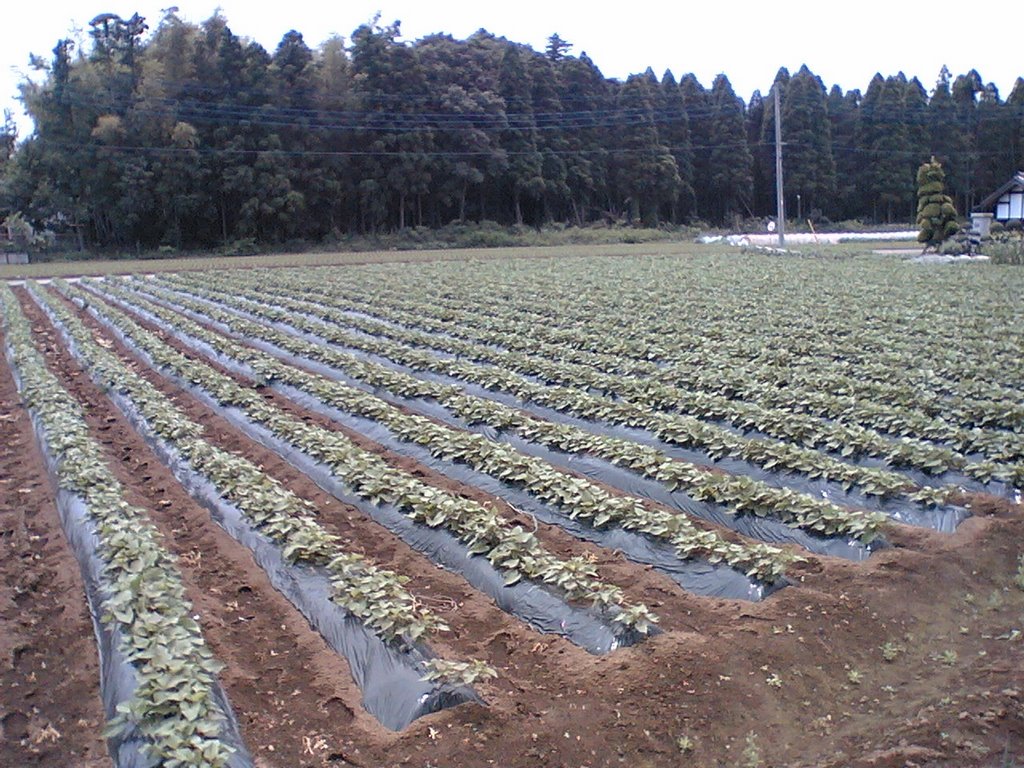
(Picture: Horticulture in Ami-machi, Ibaraki, Japan)
Let`s share knowledges, sciences, and experiences
Technology, Partnership & Equality
Institutional Aspects of Agriculture Development in Japan

A Summary of Chapter II of the Agricultural Development of Japan: a Century’s Perspectives, by Hayami, Y. and S. Yamada, 1991, University of Tokyo Press.
Transition to Modern Agricultural Growth

The society was under rigid hierarchical class structure during Tokugawa regime, in that social mobility was low, and occupations were determined by blood. Based on this class, the feudal lords and samurai determined the tax revenue including from peasant in type of rice tax. To ensure the sustainability of this tax, the peasant activities were also restricted with some rules including their relation to their land. The dominant character of farming in the Tokugawa period was large holding. When the intensive cropping system developed the small-scale based on family labor to be more consider.
As the market economy developed, the peasants got the opportunity to raise the agriculture productivity for selling to the market. Improvement in agriculture technology such as the use of fertilizer, improvement of flood control and irrigation positively contributed to the agriculture development. To prepare for open/market economy system, under the modern nation of Emperor Meiji, the feudal constraints were removed on economic activities one by one. Thus, some new policies introduced include 1) free to growth crops or mortgage the land for the farmers (1871/1872), 2) the land tax revision (1895), and 3) promotion of better education system. From those mentioned policies, land tax revision was the most important reform in the Meiji era. This policy aimed to secure the stable source of government revenue for modernization. Thus, most agricultural resources transferred to nonagricultural sector for this purpose. The communal resources such pasture and forests were also transformed to the wealthy landlords or to the government ownership to establish the land title for the tax sources.
Unfortunately, for small-scale farmer, the dominate farmers (Table 2-1, page 66), in some cases this policy did not contribute positive economy impact due to the common resources as the main sources of fertilizer, fuel, and feed had been transferred to the landlords or government. Related to the technology development, western and US agriculture model was chosen. Thus the use of modern input such fertilizers and machinery combined with organic farming was the main form.
The government also established agriculture education and training center such as Komaba Agriculture School (later become college of Agriculture Tokyo University in 1890) and Sapporo Agricultural School (later become college of Agriculture Hokkaido University in 1918). Unfortunately, in this importation technology only the industries gained the successful, while agriculture was great unsuccessful due to the technology incompatible.
Initial Growth

Learning from the previous unsuccessful story, government began to develop technology consistent with their local ecological condition. The Iterant Instructor System and the Experiment Farm for Staple Cereals and Vegetables (1885) began to diffuse seed varieties and more productive cultural practiced already in use by Japanese farmer. The agriculture education was also reoriented from British based to German style. Thus, education and research in which agriculture chemistry and soil science of von Liebig tradition were established. Even though, insufficiency of facilities and logistical supports always handicapped the development of experiment farm and research. The output and productivity of agricultural were accelerated at the beginning of the 19 century.
The indigenous technology development in seed selections such as in rice whose done by the rono, veteran farmers, then followed by the promotion of agriculture society were importance factors to this acceleration. While the agriculture society took responsibility for technology dissemination, the cooperation played important role on making better bargaining position of farmers and guarantee the agriculture product marketing and capital credit. The location-specific technology growth also motivated to the raised of land productivity. However, the application of fertilizer seems required to substitute the limitation of the land. Thus, the commercial scale of fertilizers began to growth such as the Tokyo Artificial Fertilizers in 1888. A relative well-develop land infrastructure from the Tokugawa period also made possible the application of seed-fertilizer technology. The Meiji government also promoted land-improvement project and special bank support to this project. The participation of landowner also became a compulsory in this era. As the expanding demand of silk, a number of technical and institution were also established. The summer-fall culture also develop, thus increase in efficiency of labor utilization by providing employment for seasonally idle labor.
Interwar Stagnation

The rapid agricultural growth in the later half of Meiji era might be consider driven by 1) the successful on the development of indigenous technology, 2) the feudal constrain reform, 3) good relationship among farmers (including innovative landlords), agricultural scientists, and agricultural supply firms together with 4) the proper guidance of the government. However, as the industry growth rapidly, the investment on nonfarm increased rapidly. The innovative landlords also shifted to this business and tend to become “parasitic landlords” (page 77), particularly in the late Meiji era and Taisho era (1912-1926). Thus, the political champagne of those landlords also move from agricultural productivity to agricultural protectionism. As a result, the indigenous technological potential exhausted exists and followed by deceleration of agricultural output and productivity (in 1910s). Unfortunately, this decline coincided with the boom of World War I, forcing farm price to rise to an unprecedented high level that caused social unrest and culminated in the Rice Riot (Kome Sodo) triggered by fishermen wives in 1918. Importing rice policy from Korea and Taiwan was chosen to overcome the riots. This program was followed by the “Sanmai Zoshoku Seisaku” policy in that high-yielding Japanese rice introduced to those colonies. This policy succeeded in increasing in the flow of colonial rice to Japan.
However, as the world recession (1920s) hit Japan and the aggravation deflationary policy, the serious agricultural crisis was existed. Thus, government began to adjust the rice supply in the market by 1) engaging in the rice purchase, sale, storage, and processing, and 2) restriction import from foreign countries (Rice Law of 1921), and 3) Rice Control Law that replaced the amendment Rice Law authorized the government to buy and sell unlimited quantities of rice at the floor and ceiling price. In the farm level, 4) government spend on rural infrastructure, 5) liquidation of farm debts from usury by releasing credits from the postal saving funds, and 6) promote self-sufficiency as well as the 7) agriculture cooperation. Since 1926, 8) government also promoted the tenancy system of the landlords land into owner cultivated area thus agrarian structure of Japan shifted. Even the whole agricultural performance in this period was stagnant, new potential agriculture technology was accumulated. The research institute were also reorganized, even the breeding (rice) still became the main focus.
Agricultural Development since World War II

After devastated by the World War II, Japan tried to secure food supplies from domestic agriculture through some program such as 1) several incentives schemes; 2) emergency land-settlement program; and 3) Differential Production Scheme in which fertilizer industry together with coal mining and iron steel industries was given high priorities; and 4) continuing land reform (1946-50) and the reorganization of the agricultural cooperative association.
To execute land transfers, an Agricultural Land Commission was established in each village, consisting of three representatives from the landlords, farmers, and tenants. The successful of this reform was related to the power of occupation force and the backlog of knowledge and experience of land-tenure system. This reform promoted more equal assets and income distribution among farmers, thereby contributing critically to the social stability of the rural sector. Reorganization of agricultural institution also contributed positive impact on agriculture growth. Nogyokai that was designed to share responsibility of controlling and mobilizing village economies for war purpose, transfer to agricultural cooperative association in 1947. Structurally, this cooperation covers the village, prefecture and national level, in which took a function as marketing, bank, insurance and political lobbying institution. Thus, agricultural production recovered rapidly from its 1945-47 botom. By 1952 direct government control on food commodities, except for rice, had been lifted, and the food shortages completely disappeared with the bumper crop of rice in 1955.
Technological potential accumulation since the 1930s under the Experiment System, the rehabilitation and improvement of flood controls and irrigation facilities, are some major factors underlying rapid growth in the post-World War II. This growth was further enhanced by the supply of new industrial inputs such as insecticides and pesticides, and the farm mechanization. Those factors were such type of response on the relative rise in farm wages, due to labor out migration from agriculture, particularly in the late 1960s.
Agricultural Adjustment Problems

Agriculture began to face the adjustment problem as the miraculous economic growth since 1950s. Since the agriculture worker output lag behind the industry sector, the level of income and living for this households lagged behind urban households. Thus, the major goal of agricultural policy shifted from an increase the production of food staples to reduction in the rural-urban income gap. The New Village Construction Program that was initiated in 1965 encouraged to promote the cooperative agricultural development plan in order to increase the production of commodities having high economy value such as livestock, fruits, and vegetables. This program was also supported by some credits scheme to rise the purchase of livestock, pasture improvement, etc.
The major constraint on the increase in agricultural productivity was the small size of the farm units. Thus, protection on farm-product price and restriction import was such type of farmer request to the government. In 1960, strong political pressure from farm organization finally resulted in a rice-price determination formula. The “Production Cost and Income Compensation Formula” that so-called formula were determined by the cost of production of the paddy filed, in which the wages for family labor are valued by nonfarm wage rates in order to guarantee fair returns for the labor of rice produces. This policy drove the increases in rice price and contributed to the reduction in the gap between farm and nonfarm income and wages (Table 22, page 92). Thus, after the enactment of the Agricultural Basic Law in 1961, the price at which the government purchased rice from producer increased very rapidly and was consistently higher than the government sale. The domestic production also expand, while consumption remained stable until 1965 and decreased rapidly there after, resulting in accumulation of surplus rice in government storage. Rice control program consumed a large percentage of central government budgets (Table 2-3, page 94). Disposal surplus-rice program succeed in eliminating the excess rice supply.
The international pressure (GATT Uruguay Round) to reduce the agricultural protection was another important factor that preventing rice price supports rising significantly in the 1980s. As the food self-sufficiency decline, import increase sharply in the last two decades particularly in nonrice cereals and soybean (Table 2-4, page 95). Although trade liberalization has progressed rapidly in Japan, it has not been satisfied the demand of agricultural exporting countries in the face of extremely rapid expansion in manufacturing exports from Japan.
Recently, the international friction concerning the agricultural commodities imports has become one of the most critical policy issues not only for the agriculture but also for the whole economy. The domestic agriculture efficiency is the long term answer to compete international. As mentioned previously, the challenges were 1) the limiting of land size that become barrier to the agricultural growth particularly in the last three decades, while 2) the agricultural workers declined sharply (Table 2-5, page 98). Even the Land Law was amendment in 1962 and has removed 3 ha ceiling on land ownership, it was not so effective in stimulating the land market due to farmers prefer to wait for the windfalls gains from the possible conversion of their land for factories. Thus, income equalizing with the nonfarm families were challenging. The expansion in part-time farming even seem as factor inhibiting expanded operational scale for full time farmers, this activity has also helped to equalize agricultural and nonagricultural and has contributed importantly to social stability by preventing rural depopulation and urban overcrowding. Thus, as the industrialization achieved high level, agricultural protection tend to increase including in Japan.
(Picture: Paddy field and infrastructure in Ami-machi, Ibaraki)
Let`s share knowledges, sciences, and experiences
Technology, Partnership & Equality
Energy, It is really our problems

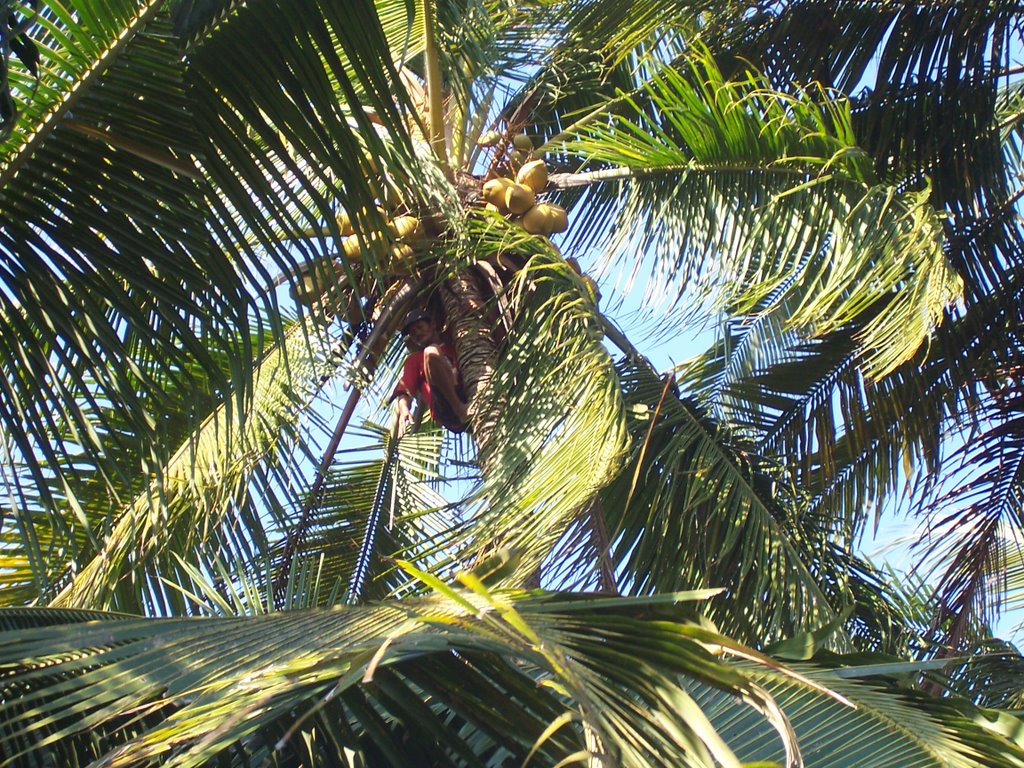
When you see this picture you will probably ask whether there is a relationship between the coconut tree and our energy problems. I say yes! This is one of the energy source and the way to adapt to a limited acces to the commercial energy or let we say the oils for rural communities. I took this picture when I visited Pasir Mendit, Jangkaran Village, Yogyakarta in September 2005, less than a month before goverment made a new oil price on October 1, 2005 (I mention new price because it increased more than 100% in average).
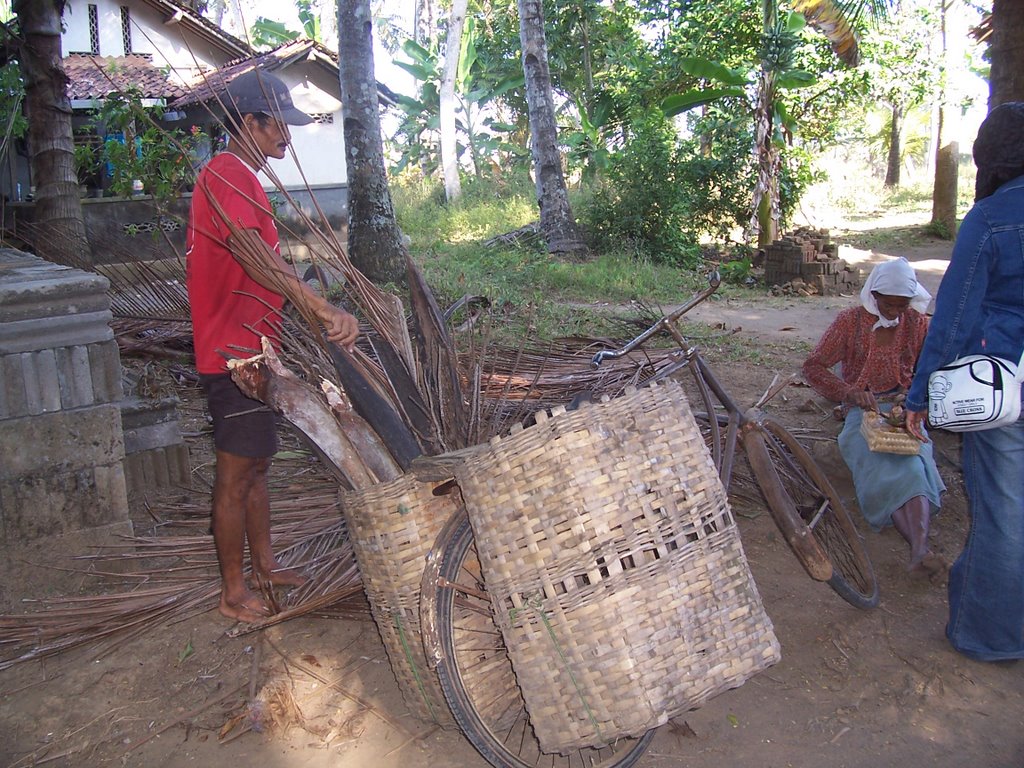
At the top of cocconut tree, height more or less 10 meters, you saw a man with a red t-shirt in the first picture. This was the man, age more than 55 years old who collected dry part of cocconut stem and midrib as the main source of energy for daily cooking. He moves from one cocconut tree to other trees 2-3 times a week to support his family energy needs. Thank God, this village full of cocconut trees that also become one of the income source beside the main from farming-base activities. Recently people also diversifying their income sources as the fisher as well as aquaculturist.
As the oil become the goverment main concern and the main energy source (curently it contributes 63% of primary energy consumption), the other energy source such as renewable energy did not well promote. This country did generated high economic advantages (economic windfall)from the high international oil price in 1970s as Indonesia become the oil net-exporter country. However, the current price to reach US$50 per barrel give worse impact to Indonesian economy as the country switch to the net-importer. As the price increased to reach US$ 70 per barrel in the September 2005, the government predicted the oil subsidy would close to 4.3% of GDP and the deficit of budged reached 1.7% of GDP. Thus, energy will become very crusial issues for the sustainable development including the rural areas.
Let`s share knowledges, sciences, and experiences
Technology, Partnership & Equality

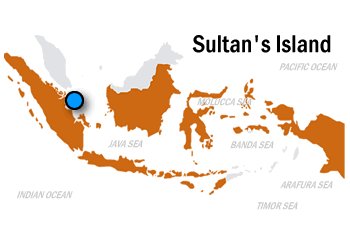
Penjualan Pulau: Isu di Bulan Maret

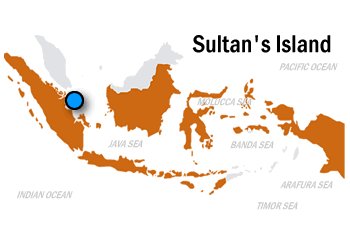
Penjualan pulau ternyata bukan hanya berita isapan jempol. Pulau Sultan di kepulauan Riau sempat diiklankan di website privateislandsonline.com walaupun kemudian diumumkan tidak ada pulau yang dijual di wilayah Indonesia oleh media/perusahaan yang sama (klik disini). Rupanya beberapa media dalam negeri terus memberitakan iklan tersebut, seperti Waspada Online 1 Maret, Antara News 3 Maret, 4 Maret, dan Gatra 5 Maret. Sebelumnya, isu yang sama juga sempat bergulir untuk Pulau Bidadari. Media masa rupanya masih menjadi kekuatan keempat setelah Trias Politica yang diusung pemikir Perancis, Montesquieu. Kita berharap pulau-pulau yang berjumlah lebih dari 17.000 di negeri kita dan diantaranya hanya sedikit yang kita ketahui namanya, dapat dikelola dengan lebih baik. Perhatian selama ini masih berpusat di satu pulau yang bernama Jawa, tidak lain karena alasan ekonomi dan politik. Entah bagaimana nasibnya pulau-pulau yang diisukan tersebut jika media massa tidak memberitakannya.
(Sumber foto: privateislandsonline.com)

Let`s share knowledges, sciences, and experiences
Technology, Partnership & Equality

Indonesian Marine Capture Fishery: A Limit to Grow

Since 1999, government declared fishery and marine based industry as one of the national economic prime mover. The high economy potential of the bio-resources was believed could potentially drive the growth of the national economy particularly in the coastal rural areas. This paper tried to map the footprint of the marine fishery growth since the early era of Indonesia and recommend a few alternatives fishery management for the future development. The statistical records and some secondary sources were used to delineated how the fishery growth. Since the early of 1900s fishery has extended its frontier through modernization. In the last half century (1951-2001), the fishery production grew dynamically and tended to limit to grow in the current period (1999-2001). While fisher numbers grew higher than production and fishing boats in some periods. Based on the fishing boats structure, the coastal-base was dominating current fishery industry (75%). Heavy exploitation and depletion of the bio-resources might challenge the sustainability of this industry, thus rethinking current fishery management is required. Following were some of the alternatives including 1) rethinking the fishing rights, 2) improving the fishery industry structure, 3) strengthen the monitoring, controlling, and surveillance (MCS) system, 4) incentives for resource conservation and rehabilitation including its habitat, and 5) integrating fishery into overall coastal rural development.

For ditails please visit my paper on Inovasi Online March 2006 (please note the production data supposed in thousand tons)

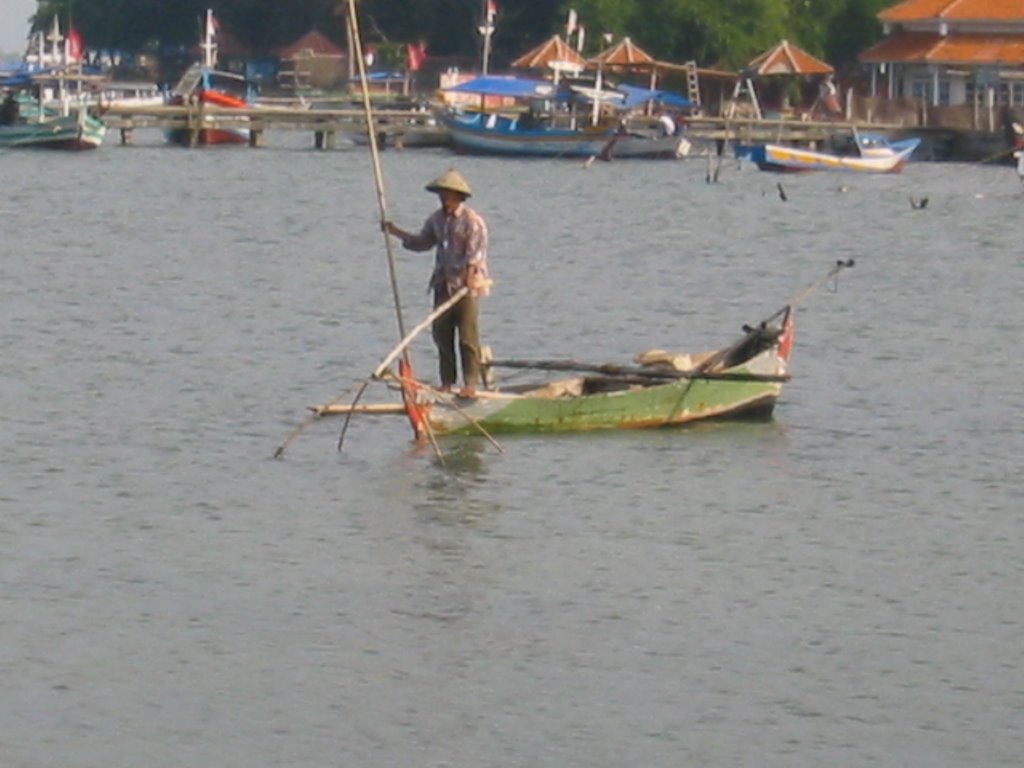
(Picture: tradisional fisher in Madura Island)

Let`s share knowledges, sciences, and experiences
Technology, Partnership & Equality
Kreativitas ditengah kelangkaan sumberdaya

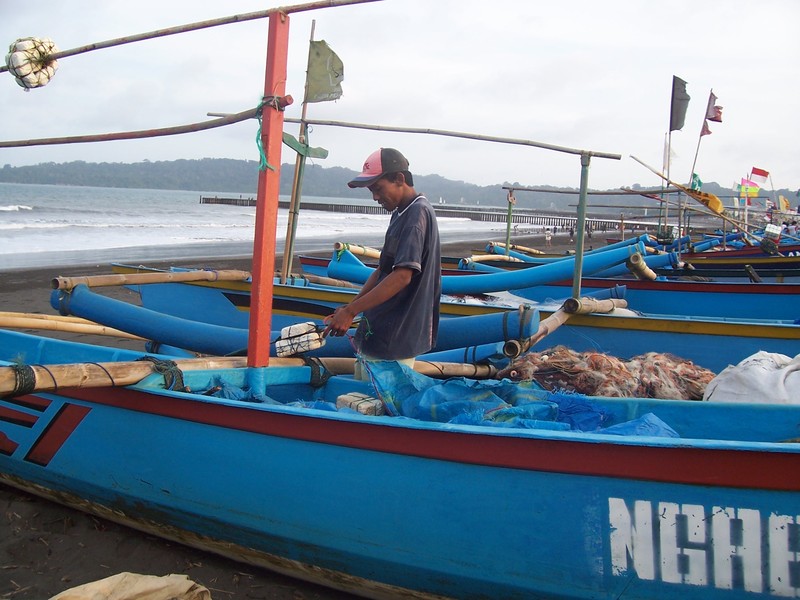
Teluk Penyu, pertama kali saya datang di teluk ini dipertengahan 1990an untuk sekadar menyelami bagian permukaan dari dinamika masyarakat pesisir. Akhir tahun 1990an sampai di tahun-tahun terakhr ini lebih sering saya mengujunginya untuk bisa sedikit banyak belajar dari masyarakat ini. Terakhir saya datang September 2005 yang lalu, setelah selama dua bulan Agustus-September tahun sebelumnya “bolak-balik” Jogja-Cilacap untuk mengumpulkan sampel ikan layur. Dalam tahun terakhir ini saya banyak menyimak perubahan yang luar biasa dari teluk ini dimana perahu motor tempel menutupi hampir seluruh ruang terbuka pasir pantai Teluk Penyu. Saya pikir, ini perkembangan yang luar biasa dan rasionalnya kalo terjadi perubahan yang demikian pesat dari ekstraksi sumberdaya ikan pasti masih ada keuntungan yang bisa diperoleh darinya. Itulah kira-kira yang saya tangkap dari dasar teori ekonomi perikanan yang sejak lama diajarkan Gordon. Foto di atas adalah salah seorang nelayan yang sempat saya ajak “ngobrol ngalor ngidul”. Dari sana saya mendapatkan sebagaian pelajaran, bahwa di tengah kelangkaan sumberdaya dan penghasilan yang semakin menipis, kreativitas banyak tumbuh termasuk memodifikasi jaring ingsang dasar dengan tambahan rumpon dari potongan terpal dan “rumbai” dari tali rafia. Dengan cara ini ikan diharapkan akan tertarik sehingga lebih mudah ditangkap. Sepertinya, banyak teknologi lahir dari kreativitas nelayan-nelayan seperti ini seperti lampara dasar yang banyak tumbuh setelah Trawl dilarang karena berbagai tragedi perebuatan sumberdaya di akhir tahun 1970an.
Let`s share knowledges, sciences, and experiences
Technology, Partnership & Equality
« Older posts Newer posts »

© 2026 Suadi Fieldnotes

Theme by Anders NorenUp ↑